A barbell on a rack in the first light of morning, ready to be loaded again

After the Deload: Why the Rebound Isn't Automatic

You took the week. You dropped the volume, cut the load, and left reps in the tank like you were supposed to. And now you’re standing in the gym on Monday, slightly nervous, waiting to feel the thing everyone promised. The fresh legs. The easy PR. The “I forgot how good this feels.” Sometimes it’s there. Sometimes it isn’t — and if it isn’t, most lifters draw the wrong conclusion. They assume the deload was wasted, or that they’re getting old, or that their recovery is broken. What they rarely consider is that the rebound was never automatic in the first place. It has to be earned on the way back, not just on the way down. ...

A weighted upper-body row moved explosively, dark and editorial

Muscle Power: The Longevity Number Your Strength Test Misses

Tell a doctor you want to know your risk of an early death, and the test you’ll get almost never moves fast. It measures how much you can do — how hard you can squeeze, how heavy you can lift. It never asks the question that a decade of data now says matters more: how quickly can you do it? Muscle power — force multiplied by speed — beats raw strength as a predictor of mortality, and most men over 40 don’t train it at all. They train the slow half, the heavy half, and leave the speed half to waste away. ...

A blood test tube and a small amber capsule under warm light, with a shadowed dumbbell behind

Vitamin D After 40: The Muscle Number Your Blood Test Hides

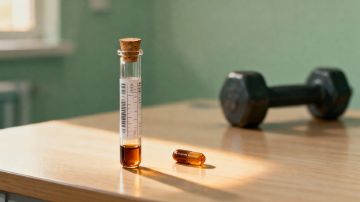
There’s a number hiding on the blood panel most men over 40 skip reading. It’s not cholesterol, not HbA1c, not testosterone. It’s vitamin D — and if it’s low, it’s quietly doing more damage to your muscle than you think. Here’s the catch, and it’s the entire point of this post: vitamin D is not a supplement that makes you stronger. It’s a deficiency marker. Below a threshold it’s associated with weaker muscles and worse physical function. Above that threshold, taking more does almost nothing. The supplement industry wants you to forget that distinction, because “take this to get jacked” sells better than “check this one number so you know you’re not deficient.” ...

Muscle as metabolic armor — a strong back and shoulders in near-silhouette, jade rim light

Muscle Is Metabolic Armor, Not Vanity

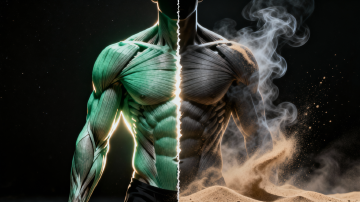
You’ve been told muscle is about how you look: bigger arms, a wider chest, something to show for the gym. That framing has it exactly backwards. Skeletal muscle is the largest metabolic organ most men never think about. It’s where your body disposes of glucose after a meal. It’s a gland that secretes signals affecting your brain, your immune system, and how fast you age. Lose it, and the diseases of midlife — type 2 diabetes, frailty, dependence — arrive years early. ...

A barbell resting on the floor in soft shadow, recovery week

Deload: The Recovery Week You Keep Skipping

There’s a paradox every lifter eventually runs into, and men over 40 hit it sooner than most. You train consistently. Your effort is real. And then the numbers stop moving — sometimes for weeks. Most people respond by training harder. More sets, more weight, less rest. And that’s the exact move that keeps them stuck. The problem isn’t a lack of effort. It’s too much effort with no planned break from it. A deload — deliberately backing off for one week — is the most commonly skipped tool in strength training, and among the most effective. Because strength doesn’t come from the work itself. It comes from what the work triggers once you stop and let it happen. ...

A kettle boiling on a stove with a stopwatch running, dark and editorial

Exercise Snacking: Short Daily Bursts Beat the 'No Time' Excuse

The most common excuse for not training isn’t a lack of motivation. It’s a lack of a clean hour. And a clean hour is what the entire fitness industry has sold you as the entry ticket: warm up, work your sets, cool down, shower, commute back. If you can’t find sixty uninterrupted minutes, the story goes, you might as well not bother. That story is wrong, and a wave of new evidence is quietly dismantling it. Exercise snacking — brief, sharp bouts of movement scattered through your day — produces real, measurable fitness gains. No gym. No single uninterrupted block. No equipment beyond a chair and a flight of stairs. ...

A man standing on one leg in soft shadowed light, editorial and calm

Balance: The Skill You Regret Not Training

Walk into any gym and you’ll see men training what they can see — chest, arms, legs, back. Almost no one trains the thing that quietly decides whether they stay independent for their next thirty years. Balance isn’t a party trick for old people. It’s a use-it-or-lose-it system that peaked in your twenties and has been declining ever since — silently, a few seconds a year — until one day you reach for your sock, lose your footing, and it’s suddenly a medical event instead of a stumble. ...

A strong hand gripping a pull-up bar, dark and editorial

Grip Strength: The Mortality Number Most Lifters Ignore

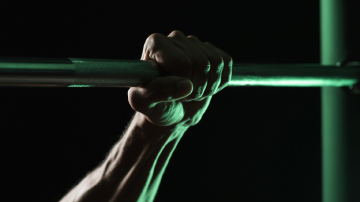
When a doctor checks your risk of an early death, they reach for the obvious numbers: blood pressure, cholesterol, blood sugar. They almost never reach for your hand. That’s the mistake a decade of evidence has quietly corrected. Grip strength is not a party trick. It is one of the strongest, cheapest, most repeatable predictors of how long you’ll stay alive and independent — and, in the largest study ever done on it, a stronger predictor of cardiovascular death than systolic blood pressure. ...

How to Lose Fat Without Losing Muscle

Here’s the quiet problem with almost every weight-loss success story: the scale drops, the clothes fit, and nobody asks what was actually lost. Fat, sure. But almost always muscle too. The scale can’t tell the difference. It reports one number — and that number is lying to you about which of the two you just spent. For men over 40, this isn’t a minor detail. Muscle is the asset you can’t afford to lose: it’s what burns calories at rest, keeps your joints stable, and decides whether you age into strength or frailty. Lose it during a cut, and you arrive at “goal weight” looking smaller and feeling weaker — with a slower metabolism that’s primed to put the fat right back on. ...