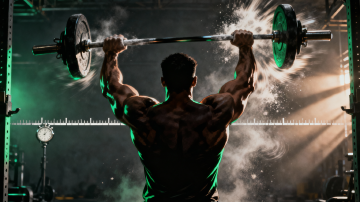
A weighted upper-body row moved explosively, dark and editorial

Muscle Power: The Longevity Number Your Strength Test Misses

Tell a doctor you want to know your risk of an early death, and the test you’ll get almost never moves fast. It measures how much you can do — how hard you can squeeze, how heavy you can lift. It never asks the question that a decade of data now says matters more: how quickly can you do it? Muscle power — force multiplied by speed — beats raw strength as a predictor of mortality, and most men over 40 don’t train it at all. They train the slow half, the heavy half, and leave the speed half to waste away. ...

Daily steps and mortality

10,000 Steps Is a Marketing Number, Not a Science Number

If you wear a watch or a band, you know the picture: it’s eleven at night, you’re two thousand steps short, so you walk laps around your building. The watch sets off fireworks and you feel like you’ve done your duty for the day. That number — 10,000 — you’ve assumed is a scientific standard. It isn’t. It was a slogan invented in 1965 by a Japanese clock company to sell pedometers, and at the time there was no research behind it at all. The science only got bolted on decades later. ...

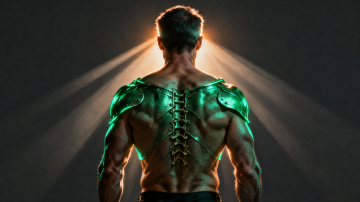
Muscle as metabolic armor — a strong back and shoulders in near-silhouette, jade rim light

Muscle Is Metabolic Armor, Not Vanity

You’ve been told muscle is about how you look: bigger arms, a wider chest, something to show for the gym. That framing has it exactly backwards. Skeletal muscle is the largest metabolic organ most men never think about. It’s where your body disposes of glucose after a meal. It’s a gland that secretes signals affecting your brain, your immune system, and how fast you age. Lose it, and the diseases of midlife — type 2 diabetes, frailty, dependence — arrive years early. ...

A man standing on one leg in soft shadowed light, editorial and calm

Balance: The Skill You Regret Not Training

Walk into any gym and you’ll see men training what they can see — chest, arms, legs, back. Almost no one trains the thing that quietly decides whether they stay independent for their next thirty years. Balance isn’t a party trick for old people. It’s a use-it-or-lose-it system that peaked in your twenties and has been declining ever since — silently, a few seconds a year — until one day you reach for your sock, lose your footing, and it’s suddenly a medical event instead of a stumble. ...

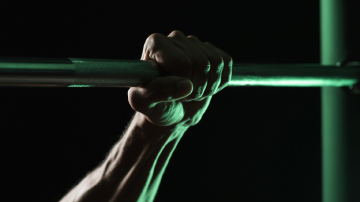
A strong hand gripping a pull-up bar, dark and editorial

Grip Strength: The Mortality Number Most Lifters Ignore

When a doctor checks your risk of an early death, they reach for the obvious numbers: blood pressure, cholesterol, blood sugar. They almost never reach for your hand. That’s the mistake a decade of evidence has quietly corrected. Grip strength is not a party trick. It is one of the strongest, cheapest, most repeatable predictors of how long you’ll stay alive and independent — and, in the largest study ever done on it, a stronger predictor of cardiovascular death than systolic blood pressure. ...

Zone 2 and VO2max: the longevity engine most lifters never build

Zone 2 and VO2max: The Longevity Engine Most Lifters Never Build

Ask a man in his forties how his training is going and you’ll hear about his squat, his bench, maybe his deadlift. Ask about his VO2max and you’ll usually get a blank look. That’s a strange gap, because of every number you can attach to your body, your VO2max is among the best predictors of how long you keep doing anything at all. Here’s the tension at the heart of the decade-scale plan. You lift to keep muscle, protect your joints, and hold off the slow leak of strength that middle age brings. That’s correct — strength matters, and it matters more after forty, not less. But the aerobic engine underneath it is the thing most lifters quietly neglect, and the evidence says that engine is doing some of your most important longevity work behind the scenes. ...