
Photo Tracking vs. Manual Logging: Which Actually Sticks?

Photo Tracking vs. Manual Logging: Which Actually Sticks?

Every tracking method works in the first three days. That’s the trap. You download the app, you weigh the chicken, you type in the rice, you feel virtuous — and then Tuesday afternoon hits, you’re out of the house, you grab a sandwich from a shop you don’t recognize, and the whole system quietly dies by Thursday. The question has never been “does tracking work.” It works — dozens of studies confirm that self-monitoring is one of the strongest predictors of weight loss. The question is whether the method survives your actual life. ...
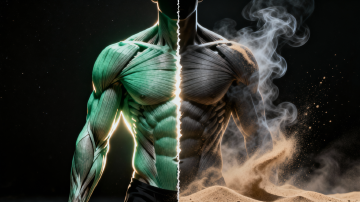

How to Lose Fat Without Losing Muscle

Here’s the quiet problem with almost every weight-loss success story: the scale drops, the clothes fit, and nobody asks what was actually lost. Fat, sure. But almost always muscle too. The scale can’t tell the difference. It reports one number — and that number is lying to you about which of the two you just spent. For men over 40, this isn’t a minor detail. Muscle is the asset you can’t afford to lose: it’s what burns calories at rest, keeps your joints stable, and decides whether you age into strength or frailty. Lose it during a cut, and you arrive at “goal weight” looking smaller and feeling weaker — with a slower metabolism that’s primed to put the fat right back on. ...

You Can't Beat the Science: Track What You Eat

You Can't Beat the Science: Track What You Eat

There’s a reason the fitness industry keeps selling new, complicated-sounding solutions to fat loss, and it’s not that the answer is complicated. It’s that the answer is boring, and boring doesn’t sell transformations. The answer is this: fat loss is governed by the laws of thermodynamics, and you cannot beat them. Energy in minus energy out. That’s the whole mechanism. Every diet that “works” works because it gets you into a calorie deficit; every diet that fails fails because it doesn’t — or because it can’t keep you there. There is no supplement, no fasting window, no “fat-burning” food that overrides the arithmetic. ...

Why Crash Diets Fail

Why Crash Diets Fail

The pitch is always the same, and it works every January. Lose 10 kilograms in 6 weeks. Eat 1,200 calories a day. No exceptions, no excuses. And for a few weeks, it looks like it works — the number on the scale drops fast, the before-and-after photo gets posted, and the diet industry collects another testimonial. Then the rebound comes. Quietly at first, then all at once. Within a year or two, most people have regained most of what they lost, and a meaningful number end up heavier than when they started. ...