Train Decade — hero

Train Decade

Fitness, health, and body recomposition — the long game, one decade at a time. Evidence-based training and nutrition for men in their 30s, 40s, and 50s. No crash cuts, no quick-fix noise. Just the methods that actually work, explained clearly and tested against the evidence.

A barbell on a rack in the first light of morning, ready to be loaded again

After the Deload: Why the Rebound Isn't Automatic

You took the week. You dropped the volume, cut the load, and left reps in the tank like you were supposed to. And now you’re standing in the gym on Monday, slightly nervous, waiting to feel the thing everyone promised. The fresh legs. The easy PR. The “I forgot how good this feels.” Sometimes it’s there. Sometimes it isn’t — and if it isn’t, most lifters draw the wrong conclusion. They assume the deload was wasted, or that they’re getting old, or that their recovery is broken. What they rarely consider is that the rebound was never automatic in the first place. It has to be earned on the way back, not just on the way down. ...
How to Choose a Snowboard: The 7 Specs That Actually Matter

How to Choose a Snowboard: The 7 Specs That Actually Matter

If you lift weights and you snowboard, you already know the pattern. You train for months, you book the trip, you show up — and then you stand in a rental shop being handed a board because it’s “about your height.” Nobody asked what the board’s camber profile was. Nobody asked about waist width. And you ride away on something that either fights you for six days or, occasionally, feels inexplicably good — and you never find out why. ...

A loaded barbell on a dark platform, the moment before a heavy set

Does Heavy Lifting 'Fry' Your CNS? What the Evidence Actually Says

Type “does heavy lifting fry your CNS?” into Google and you’ll get a wall of confident answers. Yes, obviously — that’s why you need 48 hours between heavy sessions. Your central nervous system is a battery, and every hard set drains it. It’s one of the most repeated claims in the gym. It is also, as a mechanistic claim, substantially wrong — and the way it’s wrong matters, because it leads men over 40 to train around a threat that isn’t the real one. ...

A weighted upper-body row moved explosively, dark and editorial

Muscle Power: The Longevity Number Your Strength Test Misses

Tell a doctor you want to know your risk of an early death, and the test you’ll get almost never moves fast. It measures how much you can do — how hard you can squeeze, how heavy you can lift. It never asks the question that a decade of data now says matters more: how quickly can you do it? Muscle power — force multiplied by speed — beats raw strength as a predictor of mortality, and most men over 40 don’t train it at all. They train the slow half, the heavy half, and leave the speed half to waste away. ...

Dress shirt sleeve straining taut around a muscular arm, about to rip at the elbow

Pump or Real Muscle? How to Tell the Difference

The day I finally knew it wasn’t just a pump, I wasn’t in the gym. I was in the changing room after it, putting my dress shirt back on to head to work — and the fabric tore at the elbow as I slid my arm through. Not a loose thread. A seam giving way, right around the tricep, exactly where a slim-fit office shirt was never designed to meet an arm that actually trains. ...

Daily steps and mortality

10,000 Steps Is a Marketing Number, Not a Science Number

If you wear a watch or a band, you know the picture: it’s eleven at night, you’re two thousand steps short, so you walk laps around your building. The watch sets off fireworks and you feel like you’ve done your duty for the day. That number — 10,000 — you’ve assumed is a scientific standard. It isn’t. It was a slogan invented in 1965 by a Japanese clock company to sell pedometers, and at the time there was no research behind it at all. The science only got bolted on decades later. ...

Protein powder comparison

Whey vs Soy vs Casein vs Pea: Why the "Best Protein" Ranking Keeps Changing

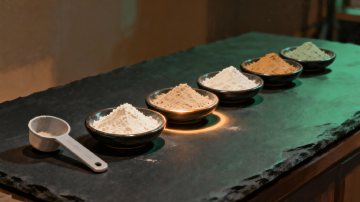
Search “which protein powder is best” and you’ll get a different answer from every page. Whey is the king. No, casein for the overnight window. No, soy is just as good and cheaper. No, pea, because dairy wrecks your gut. Here’s why the arguments never resolve: they’re ranking proteins on a measurement that changes depending on how long you watch. Run a muscle-protein-synthesis test for three hours after a scoop and whey wins. Run the same test for six hours and casein catches up. Measure what actually leaves your gut and gets retained, and pea ties milk protein outright. Every one of those studies is real, well-conducted, and correct. They just answer different questions. ...

Collagen and tendon loading

Collagen for Tendons After 40: The Supplement That Only Works With Load

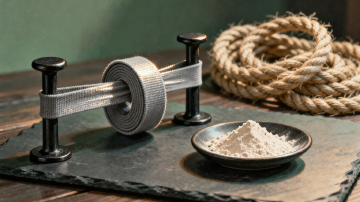
Walk down any supplement aisle and collagen has taken over half the shelf. The pitch is always the same: your collagen declines after 40, so take this and get it back. Skin, hair, nails, joints, “glow” — one powder promising everything. Here’s what that pitch quietly leaves out. Collagen is not one thing with one effect. The strongest evidence for it is narrow, specific, and comes with conditions attached. The evidence for the thing people actually buy it for — bigger muscles — is not just weak, it’s negative. ...

A blood test tube and a small amber capsule under warm light, with a shadowed dumbbell behind

Vitamin D After 40: The Muscle Number Your Blood Test Hides

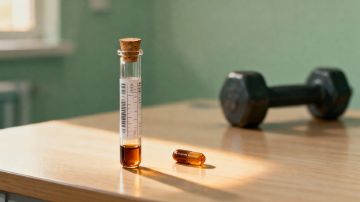
There’s a number hiding on the blood panel most men over 40 skip reading. It’s not cholesterol, not HbA1c, not testosterone. It’s vitamin D — and if it’s low, it’s quietly doing more damage to your muscle than you think. Here’s the catch, and it’s the entire point of this post: vitamin D is not a supplement that makes you stronger. It’s a deficiency marker. Below a threshold it’s associated with weaker muscles and worse physical function. Above that threshold, taking more does almost nothing. The supplement industry wants you to forget that distinction, because “take this to get jacked” sells better than “check this one number so you know you’re not deficient.” ...

A quiet body-awareness practice — sensing movement from the inside, not forcing it

You Lift, But You Don't Feel Your Body: Why Somatic Awareness Is the Missing Layer

Here’s a quiet confession most lifters over 40 would never say out loud: they’ve spent thousands of hours making their body do things, and almost no hours learning to feel what it’s telling them. Strength is output. You know output — sets, reps, load, progressive overload. But there’s a second signal you’ve been ignoring, and it’s the one your body uses to keep you out of pain, to tell you when to push and when to back off, to keep one bad rep from becoming a six-month injury. ...